

Here you can find useful tips and techniques, how-to videos, your product manual and more.
Downloads
MODELS
Tips, techniques & setup
Support videos
Frequently Asked
Questions
-
What materials can the ALLSAW cut?
The ALLSAW slices through:
Mortar
Soft to medium-hard brick
Aerated concrete blocks
Limestone
Fiberboard
Weatherboard
Composite materials
Wood
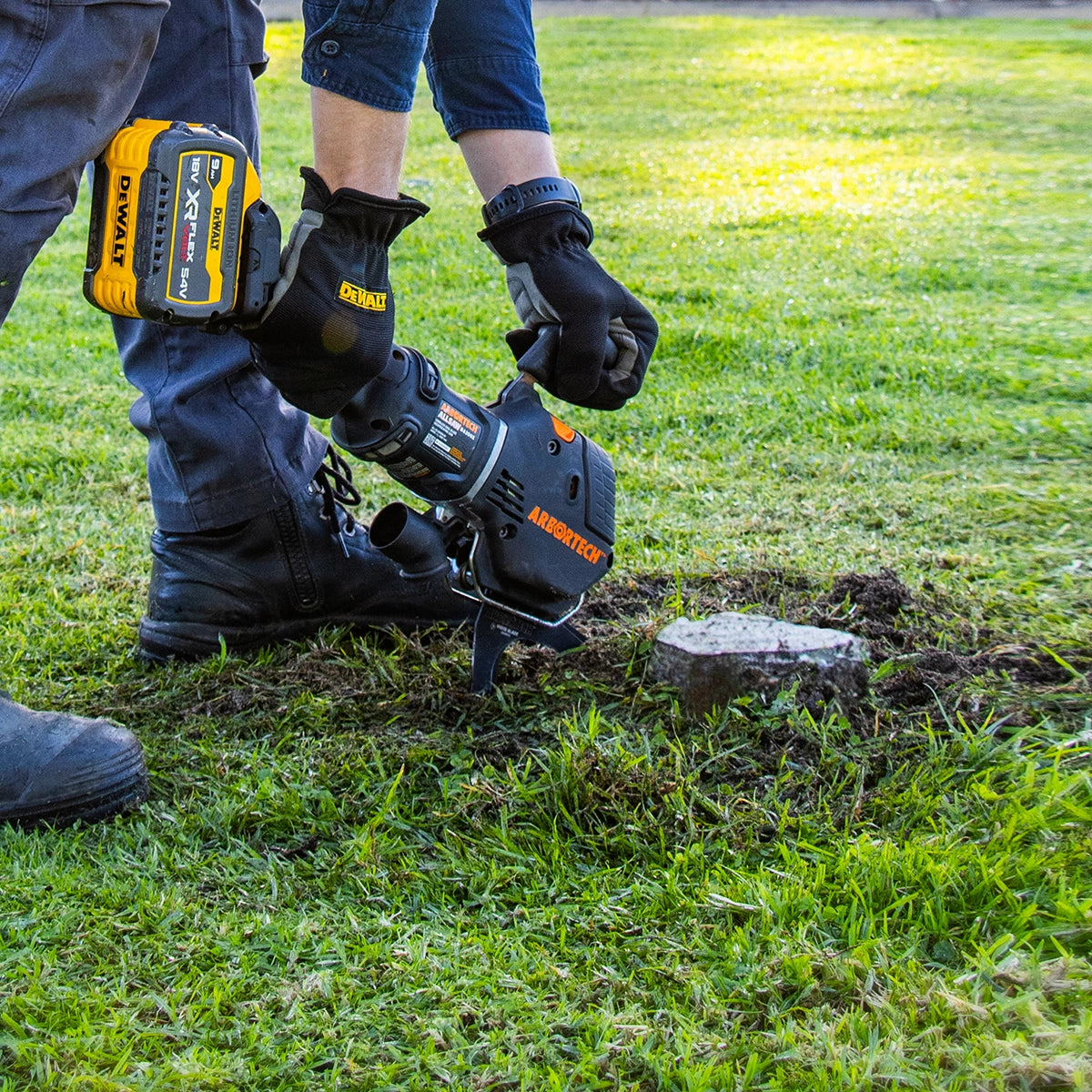
In-ground tree rootsWhether you’re tackling masonry or battling tough roots underground, the ALLSAW is built to outperform traditional saws.
-
What is the correct way to cut using the ALLSAW?
While cutting, move the tool and blade in a slow “sawing” motion, which improves the cut-rate, reduces concentrated heat build-up, and evens the wear on the blades.
CAUTION: Do NOT allow the forward or rear end of the blades to hammer onto hard surfaces (shown in figs: 10, 11 & 13) as this will damage the blades and tool. If unintentional hammering occurs, stop the tool or withdraw it from the cut immediately. When using any of the blade types, avoid hammering the ends of the blades into the ends of the cut by using a slow rocking and sweeping motion. For best performance try to ensure that the teeth are the only part of the blade in contact with the work face.CAUTION: Take care when setting the tool down to avoid chipping the tungsten carbide teeth.
-
Why do my blades keep coming loose?
- Make sure to tighten the bolts to the required 18Nm using the Ian key supplied.
- Check that no dirt or lubricant is between the blade and the conrod.
- Check the blade mount holes. If these holes become elongated (evidenced by damage inside the hole from the screw thread) the blades should be replaced. The Blades rely on close tolerances for good operation, any form of deformation of these mounting holes, combined with the hammering motion of the saw, will induce movement which will work to loosen the blade mounting screws.
-
How do I stop the blades rubbing excessively?
Remove blade/s and bend slightly to correct.
Note: If the blades rub against each other anywhere other than within 25mm / 1″ of the cutting edge, or contact force is high, it is possible to overload the tool and cause premature belt wear.
-
Why is the motor overheating?
- Check that all cooling vents are not obstructed by the operator's hand, debris in vents, or other. Clean as required.
- Check the blade condition. Excessively worn blades can cause overheating. Replace as required.
- Check the clearance between the blades. (Please see the changing blade section)
- Check that belt tension is not excessive. (Please see changing belt section)
-
The machine is noisy and vibrates.
- Check that bearings have not failed by removing plastic side cover and belt and rotating both pulleys independently checking for roughness. The power pulley should rotate easily and smoothly. If a bearing has failed contact Arbortech Customer Support.
- Check blade tension, if loose -tighten blade mounting bolts.
- Possible blade failure – replace blade set.
- Leaf spring failure – contact Arbortech Customer Support.
- Gearbox failure – contact Arbortech Customer Support.
- Top handle rubber mounts damaged or worn – replace.
-
Blades stop operating under load
- Loose belt – re-tension belt (See loose belt section)
- Worn belt – replace belt (See worn belt section)
- Worn pulleys – contact Arbortech Customer Support
- Attempting to cut material which is too hard
-
The cutting performance is slowing down.
- Teeth worn, chipped or lost. Sharpen or replace blade.
Check to see if the belt is slipping and belt tension (See belt tension section)
- Teeth worn, chipped or lost. Sharpen or replace blade.
-
Why is there grease/oil leaking from the bearings near the blade mounts?
This is normal in approximately the first hour that the new tool is operated or if new bearings have been installed. Leakage should reduce and stop thereafter.
-
The top handle is coming loose.
Worn or damaged rubber bushes – replace.
-
The machine will not run.
- Check to make sure brushes are not damaged or excessively worn. Replace as needed.
- Check power cord for damage – contact Arbortech Customer Support.
- If the tool is still not operating - contact Arbortech Customer Support.
-
Can the blade's teeth be resharpened?
With use, the blades will become dull and the cutting performance will decrease. This can be largely restored by re-sharpening the teeth with a fine grit diamond disc.
-
Blade teeth are missing / chipped / broken
- Using an incorrect cutting action can cause the blades to overheat, melting the solder and releasing the teeth. Please see the cutting technique section.
- Material is too hard.
- Care not taken in setting tools down on teeth on hard surfaces or loose in the tool box.
- Striking metal inside material
-
I can’t tighten the blade bolts fully
- Threads on bolts stripped – replace bolts not tightening.
- Threads on tool stripped – contact Arbortech Customer Support.